
3 Mistakes That Cause Nonprofits to Fail—A Lesson in Donor Stewardship from Premier League Soccer

Principal and EVP (and Chelsea supporter)

One of England’s most historic teams offers a clear warning about what happens when leaders take their eye off the ball.

Tottenham Hotspur is one of the English Premier League’s biggest soccer clubs—part of the so-called “Big Six” alongside Arsenal, Chelsea, Liverpool, Manchester City, and Manchester United thanks to decades of dominance. 

First, a quick overview of the Premier League. There are 20 teams in the league. Each team is awarded points for wins and ties (draws). At the end of the season, the three teams with the fewest points are relegated to the league below, the Championship. Conversely, the top three teams in the Championship are promoted to the Premier League.

Until recently, the idea that Tottenham could face relegation
was preposterous.

Think “too big to fail.” But relegation is more than an ego blow—it is a financial shock, with losses exceeding $300 million annually in media rights, sponsorship, and commercial revenue. What makes Tottenham’s situation remarkable isn’t just how far they’ve fallen, but how it happened: years of leadership instability, strategic drift, and a fanbase that gradually lost faith.

Paul Childs/Reuters

What Does Tottenham's Collapse Hold for Nonprofit Leaders?

Both of my sons are massive “Spurs” fans, so I’ve been watching the team’s downward spiral for a while now. In my professional life, I speak with leaders of cultural organizations, schools and universities, and community service nonprofits facing pressure on every front.

What I’ve watched happen to my sons’ club is a case study in how organizations that should be untouchable become vulnerable—and how the warning signs are almost always there before anyone acts on them.

The stadium is magnificent—I’ve seen it first-hand. Beyoncé performed there; Bad Bunny is playing this summer. The grass soccer field (pitch) breaks apart, retracts, and slides underground so an official NFL turf field can take its place. It generates significant revenue, but it is also a major distraction. The team is no longer the owners’ primary focus. Their mission now includes operating an event venue.

Nonprofits face the same pull. A grant notice is published for something outside the organization’s scope and the executive director says, “we can do that.”

A funder offers support for a new program just outside its focus area, or an earned revenue idea promises sustainability but consumes leadership attention and staff capacity. These distractions sound good at the time, but they rarely end well and they always dilute the effectiveness of the mission.

Every organization should have a strategic plan that not only charts the path forward, but keeps it from straying off that path. Strong nonprofits regularly say no—not because opportunities are bad, but because focus is what makes the mission sustainable.

View of South Stand at Tottenham Hotspur Stadium
Tottenham Hotspur stadium, regarded as the best in the Premier League, opened in 2019. Since the stadium opened, the team’s mission now includes the operation of an event venue. Less focus on the team’s performance has left Tottenham on the verge of relegation.
Paul Hudson/Flickr

Mistake No. 2: Taking Loyalty for Granted

Tottenham fans are among the most loyal in the league, yet the team's owners are literally watching them walk out the door.

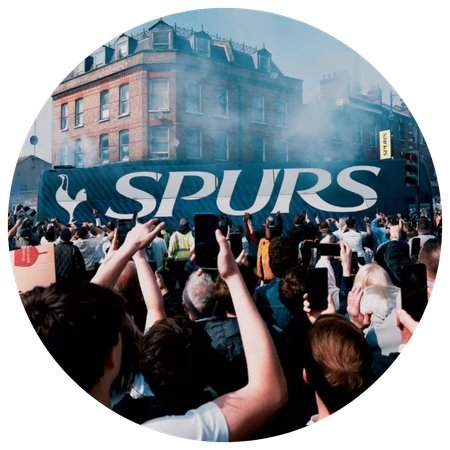
Fans have been doing their best to stay supportive even as Tottenham hasn’t won a Premier League game in more than three months. Before their last game, thousands of the faithful gathered on the streets outside the stadium to greet the team bus. They called it “Show Up, Sing Up, Stay Up” and it created an electric atmosphere of support.

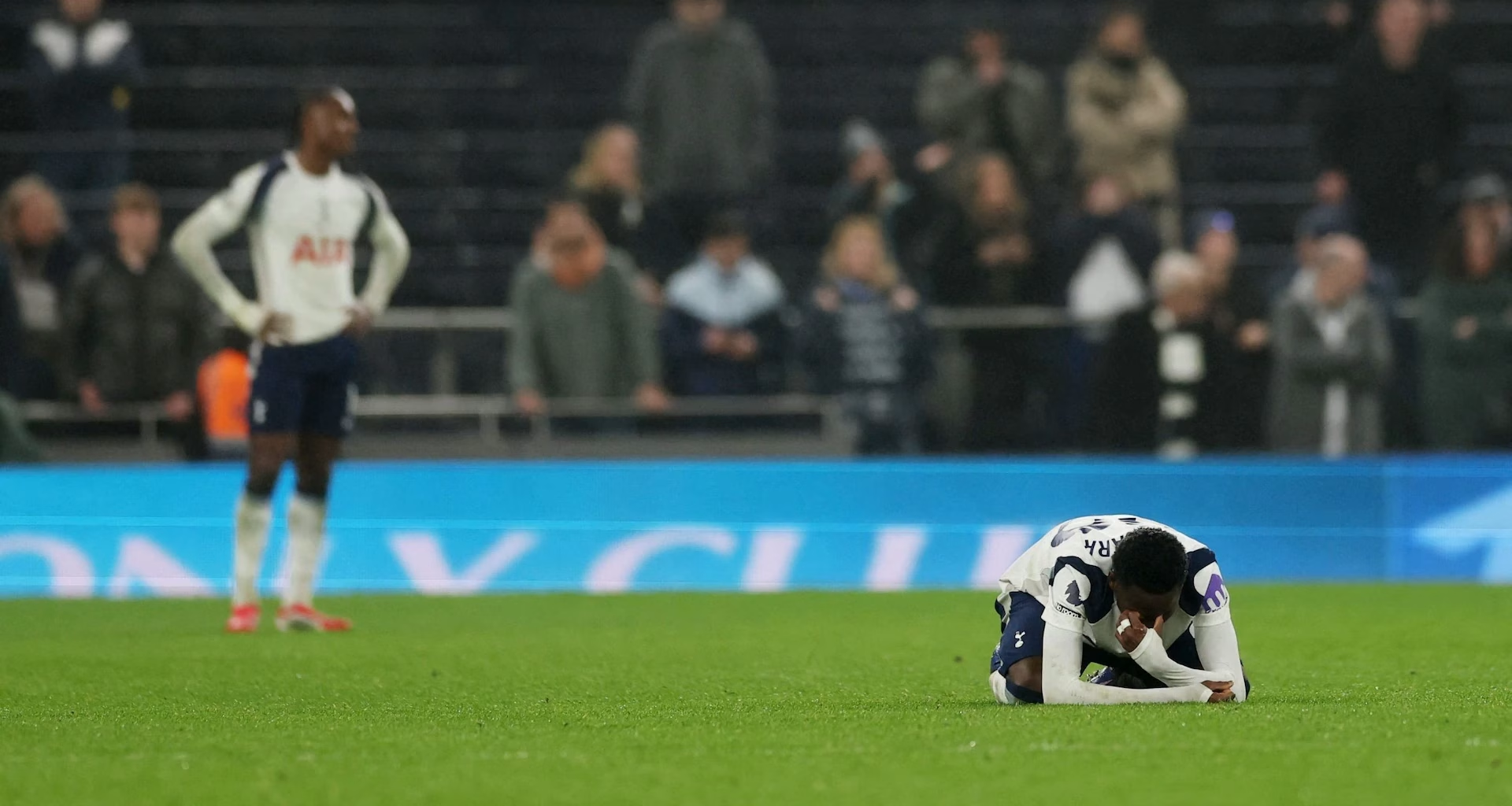
But when the team fell by three in the second half, those same fans were booing the team they desperately love. By the end of the game, most had already left. These fans are in the angry stage because they still care. The real danger comes next: apathy. When disengagement sets in, it will be tough to get them back.

Nonprofits make the same mistake by deprioritizing everyday donors—and this neglect is fueling America’s Generosity Crisis. Just 20 years ago, about 66% of Americans gave to charities. Today, fewer than half do. If left unchecked, this decline will only accelerate.

In the race for major gifts, loyal supporters who give dependably—yet in smaller amounts—are treated as background noise. When these donors stop giving, it’s not because they stopped caring. It’s because they no longer feel like their support matters.

Those everyday donors do more than give. Collectively, they stabilize revenue. They are ambassadors at a time when public trust in nonprofits is fragile. They are the prospect pool for any organization considering a campaign or expanding its major gifts program. Once everyday donors walk out the door, only a small percentage will return—replacing them is far more challenging than stewarding them well in the first place.

Loyal fans staged a rally to cheer on the team before their last game.
@spursofficial/Instagram

Mistake No. 3: Failure to Steward Staff

In 2019, Tottenham made it to the Champions League final—the pinnacle of European soccer. The team was led by giants in the game: Harry Kane, Son Heung-min, and Hugo Lloris. They lost to Liverpool 2-0.

Rather than investing in the squad that had come so close, Tottenham fired their coach and began a cycle of underinvestment and instability. They brought in teenage players with little experience or inferior players who couldn’t compete. Seriously injured players weren’t replaced. Today, Tottenham’s total player wages are the lowest of the “Big Six” clubs despite the financial resources to compete, they’ve had four coaches since last summer—each bringing a different style and confusion to the team—and they’ve lost twice as many league games as they’ve won since the start of last season.

Their owners have done nothing to build a culture that works. The consequences are now impossible to ignore.

Nonprofits fall into the same trap. High turnover drains institutional memory, erodes relationships with supporters, and quietly increases costs. Frequent leadership changes and inconsistent direction compound the problem—and yet nonprofit leaders too often accept conditions they wouldn’t tolerate elsewhere: chronic understaffing, long hours, and modest compensation.

Stewarding staff is about performance and continuity, not just morale. Burned-out teams struggle to innovate, steward donors, or execute strategy. Nonprofits shouldn’t pride themselves on a scarcity mentality; under-resourcing isn’t a badge of honor. Left unchecked, it becomes a corrosive operating model.

We often tell our clients to steward their staff the way they steward major donors. Take care of them and they’ll shine. Staff who operate in a culture of respect and investment perform better, stay longer, and advance the mission.

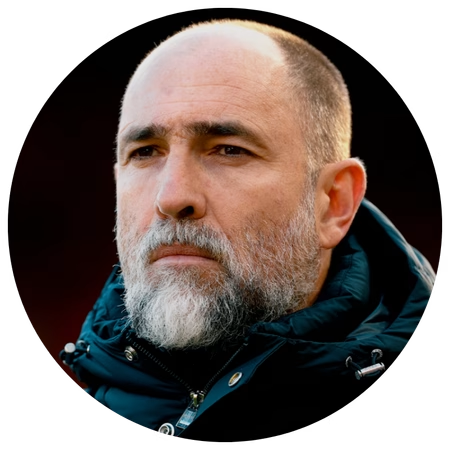
Tottenham has had four different coaches in less than one year. Igor Tudor, shown here, lasted for only 44 days.
@spursofficial/Instagram

Mind the Fundamentals

Tottenham’s story is still being written. But the trajectory is familiar to anyone who has watched a once-stable organization come undone—not through a single catastrophic decision, but through accumulated drift.

The organizations that endure are disciplined about their mission, intentional about who they cultivate and retain, and honest about what it actually costs to do the work well. The ones that struggle tend to discover too late that “too big to fail” was never a strategy… it was an assumption.

About the Winkler Group

Strong communities depend on strong nonprofits. When those organizations thrive, the people they serve do too. We help make that impact possible.

For over two decades, the Winkler Group has specialized in guiding organizations from vision to action through strategic planning, capital campaigns, and fundraising counsel that delivers results.

A national firm headquartered in Charleston, South Carolina, with offices across the country, the Winkler Group proudly walks alongside organizations committed to education, community impact, and serving the greater good.

Latest Resources & Events

Winkler Group executive team members Raymond Carnley, Bill Rose, and Michelle Dube celebrating leadership promotions.

Winkler Group Expands Leadership Team Following Record Fundraising Year

March 10, 2026

The Winkler Group, a national full-service fundraising consulting firm, announces three senior promotions, including Raymond E. Carnley, Ed.D., to Principal, to oversee firmwide operations and service delivery.

You're Not Buying Paper Towels: Why Closed RFPs Fail Nonprofit Leaders

February 10, 2026

Nonprofit leaders are not buying commodities when they hire campaign or strategic planning consultants. Yet closed RFPs often force boards and executives to evaluate judgment-driven work as if it were standardized procurement. The result may be compliant—but it is rarely well-aligned. In this piece, Jim Bush examines why closed RFPs fall short for fundraising and strategy work, and what nonprofit leaders unlock when selection processes allow for dialogue, discernment, and fit.

Ready to launch a capital campaign?

What can we help you find?