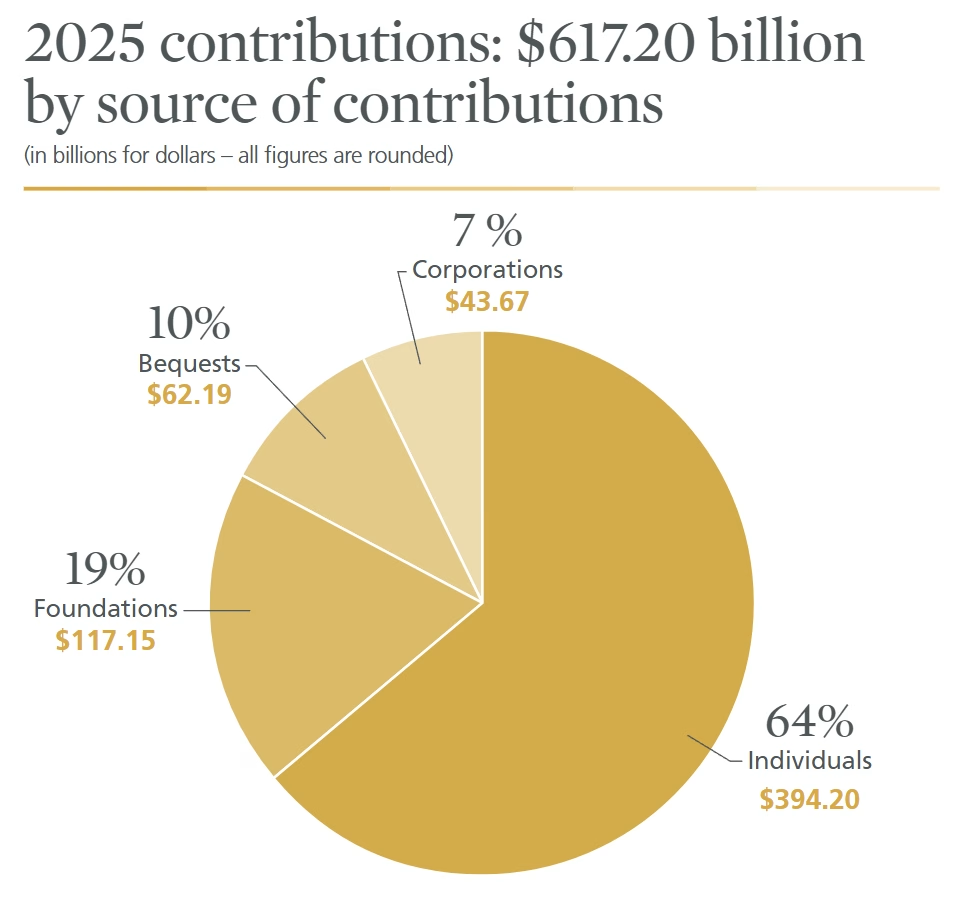
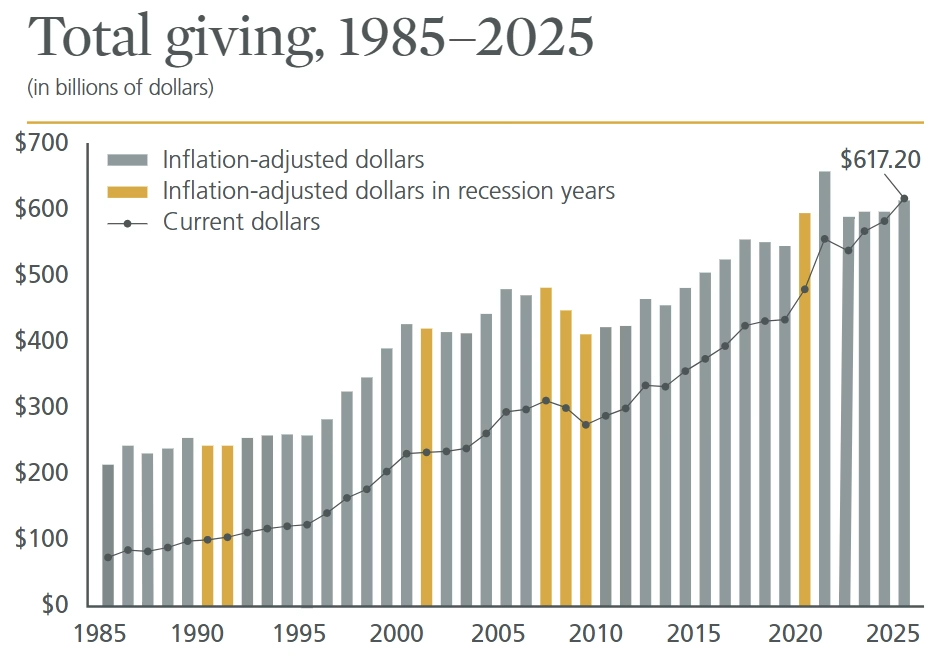
For the first time in history, Americans gave more than $600 billion to nonprofits in a single year. Total charitable giving reached $617.20 billion in 2025, a 5.7% increase in current dollars. By almost any measure, this is a remarkable achievement for our sector.
The economic backdrop helped. Equity markets remained strong, wealth at the top continued to grow, and a surge in bequest giving—up nearly 20%—pushed totals to historic levels. The headline is genuinely good news.
But fundraisers who stop at the headline will miss the story that matters most.
Behind the $617 billion record is a sector growing increasingly dependent on a narrowing source of support: mega-gifts, large estates, and foundation grants. The broad base of individual donors—the backbone of sustainable fundraising—continued to shrink.
Winkler Group principals Jim Bush and Jessica Browning share their top five insights into the impressive—and complicated—story of American philanthropy in Giving USA 2026.
Takeaway: U.S. Charitable Giving Surpassed $600 Billion—But the Headline Conceals a Two-Speed Sector
What Giving USA 2026 reveals about individual donor trends
For the first time ever, U.S. charitable giving crossed the $600 billion mark. Total giving reached $617.20 billion in 2025, a 5.7% increase in current dollars (3.0% inflation-adjusted). But don’t look at this number and think that all boats are rising with the tide. This record headline can be misleading.
Foundation giving grew 5.7%, bequest giving surged 19.7%, and mega gifts were twice as high as 2024 ($22 billion in 2025). Individual giving, which represents 64% of the total, grew just 4.1% (1.4% real) despite strong financial markets. Fundraising Effectiveness Project data similarly showed a decline in the number of donors. Sadly, the base continues to thin as our sector depends on a shrinking pool of major donors while failing to replenish the pipeline.
How to Use Takeaway #1
Report the $617 billion giving level to demonstrate sector health to your board members and major donors, but don't stop there. Tell the whole story, warts and all, to make the case for stewardship and relationship building with individual donors at all levels.
Takeaway: Bequest Giving Rose Nearly 20%—An Early Signal of the Great Wealth Transfer?
Three of the last four years have shown strong bequest growth; the timing aligns with wealth transfer projections (and has direct implications for planned giving programs)
Giving by bequest totaled $62.19 billion in 2025—up 19.7% in current dollars (16.6% real)—making it the second-highest level on record. Although bequests have grown in three of the last four years, we can’t definitively declare that the Great Wealth Transfer has begun. Giving by bequest is highly volatile year-to-year, with one large estate skewing the data. Three years of strong bequest growth, combined with the demographic age wave of baby boomers, however, does make the growth more than coincidence.
In 2025, estates of $10 million and above accounted for more than half ($37.98 billion) of the total. These mega estates are a significant long-term trend in the data, and one that has profound implications for planned giving programs, estate-adjacent giving vehicles like DAFs and QCDs, and donor cultivation timelines.
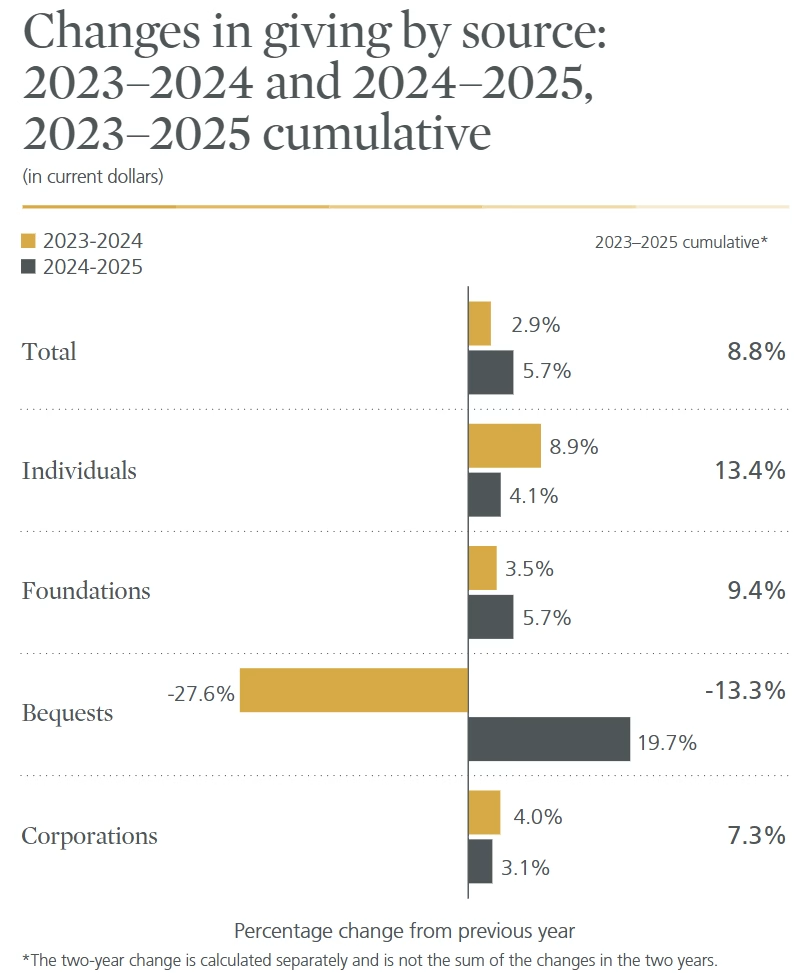
Giving by bequest is highly volatile year-to-year, with one large estate skewing the data (as seen above).
How to Use Takeaway #2
Now is the time to begin (or accelerate) the identification of planned giving prospects. Most CRMs have predictive tools that identify donors with both capacity and a history of giving: the ideal planned giving prospect. Even launching a small legacy society today will compound dramatically over the next ten years. At the same time, it's important to realize that many bequests are not immediate gifts. Instead, they flow into DAFs or foundations and eventually to the recipient organization.
Takeaway: Recurring Giving Is the Best Defense Against Volatility—Most Organizations Are Barely Using It
Top-quartile recurring giving rates are more than double the sector average
Giving USA’s data shows that foundation giving, bequest giving, and mega-gifts—the most unpredictable type of giving—drove growth in 2025. The strategic answer to this uncertainty is a strong recurring giving program, because it is predictable, budgetable, and controllable (as relationships are built over time, giving increases). A donor who gives $50 or $100 monthly is worth far more over five years than a donor who gives $1,000 once and never returns, yet we too often favor the larger gift.
The Virtuous 2026 benchmark report shows the importance of recurring gifts. Among the organizations measured, the average nonprofit generates 20.96% of revenue from recurring giving, but the top quartile generates 44%. Faith organizations lead at 25.22% while education-based nonprofits generate only 9.25% of revenue from recurring gifts. Data from Blackbaud Institute confirms that organizations with higher recurring giving percentages showed more revenue stability over the past four years.
How to Use Takeaway #3
Organizations with strong recurring giving programs have built the infrastructure to ask, onboard, and retain recurring donors consistently. The investment required is operational, not philanthropic.
Takeaway: Giving to Human Services Organizations Is 2025’s Strongest Growth Story
What the shift in donor priorities means for your case for support
Giving to human services organizations grew 5.3% in 2025 to $99.50 billion, representing an all-time high in inflation-adjusted terms. Giving to human services now accounts for 15% of total charitable giving, up from single-digit percentage levels in the late 1980s. In 2025, growth was a result of increased donor awareness of social need, disaster response (nearly $1 billion was raised for California wildfires, for example), and a growing alignment between donor values and measurable human outcomes.
This is a significant moment for the human services subsector: donors are increasingly oriented toward mission areas where they can see direct impact on people’s lives, and human services organizations are well positioned to tell that story. The long-term trajectory represented by a steady share growth over four decades suggests this is not a temporary spike but a durable shift in philanthropic priority. Both the 2026 Virtuous Benchmark Report and Blackbaud Institute data show that giving to human services was among the strongest verticals for median gift growth, one of the most significant single-vertical improvements in the entire dataset. The sector’s donors gave more per gift, not just more frequently.
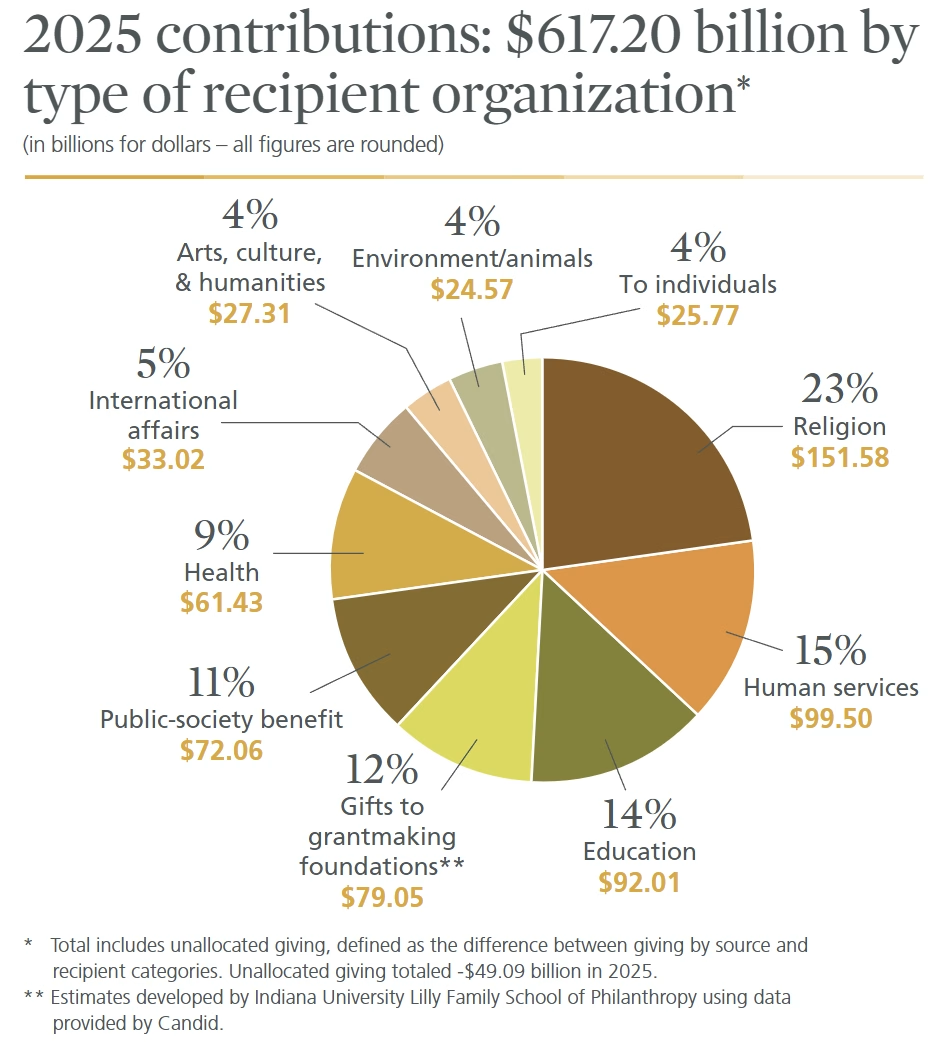
Giving to human services organizations grew 5.3% in 2025 to $99.50 billion, representing an all-time high in inflation-adjusted terms.
How to Use Takeaway #4
The shift toward human services reflects a broader donor psychology: people give to outcomes they can picture. This donor psychology applies to all nonprofits, not just those focused on human services. If your case for support leads with organizational need rather than real impact, this year's data is a signal to reorder that conversation.
Takeaway: Tax Law Changes from the 2025 OBBBA Will Reshape Giving in 2026 and Beyond
An estimated $2 billion was accelerated into 2025; DAFs, QCDs, and planned gifts will be the vehicles that matter most
The One Big Beautiful Bill Act (OBBBA), signed July 2025, introduces several provisions with direct giving implications. An estimated $2 billion in philanthropic giving was pulled forward into 2025 to lock in more favorable tax deductibility rules before the OBBBA took effect. It’s important to note, however, that most of this $2 billion went primarily into DAFs and private foundations, not to operating charities directly.
Beginning in 2026, a new $1,000 universal charitable deduction applies to non-itemizers but not to DAF contributions, which should encourage gifts at the lowest levels. Qualified Charitable Distributions (QCDs, available to donors age 70½+) are emerging as among the most tax-efficient giving vehicles available to donors. They bypass OBBBA deductibility caps and are accessible to both itemizers and non-itemizers, with a 2026 limit of $111,000.
How to Use Takeaway #5
It is critical that all development and advancement team members, as well as board members, understand and be able to explain the benefits of QCDs and DAFs to donors. It's equally important that leadership understand all the provisions of the OBBBA, particularly the caps on deductible contributions.
About the Report
Giving USA: The Annual Report on Philanthropy, the longest-running and most comprehensive report on the sources and uses of charitable giving in America, is published by Giving USA Foundation, a public service initiative of The Giving Institute. It is researched and written by the Indiana University Lilly Family School of Philanthropy at IUPUI.
Jim Bush is a member of the Giving USA Editorial Review Board and Jessica Browning is a past member of the Editorial Review Board.
Further Reading and References
- 2025 Trends in Giving (institute.blackbaud.com)
- New Blackbaud Institute Data Shows Resilience in 2025 Charitable Giving; Highlights Areas of Opportunities for Nonprofits in 2026 (blackbaud.com)
- Quarterly Fundraising Effectiveness Project Report (publications.fepreports.org)
- The 2026 Nonprofit Benchmark Report (virtuous.org)
About the Winkler Group
Strong communities depend on strong nonprofits. When those organizations thrive, the people they serve do too. We help make that impact possible.
For over two decades, the Winkler Group has specialized in guiding organizations from vision to action through strategic planning, capital campaigns, and fundraising counsel that delivers results.
A national firm headquartered in Charleston, South Carolina, with offices across the country, the Winkler Group proudly walks alongside organizations committed to education, community impact, and serving the greater good.